Home › Common Problems › Skylight Leaks and Seal Failure
Skylight Leaks and Seal Failure
in Charlotte, NC
Skylight leaks are hard to diagnose because water can travel along framing and drip several feet from the actual problem. Charlotte's climate hits skylights hard with extreme UV, big temperature swings, and powerful thunderstorm rain. Homes in neighborhoods like SouthPark and Quail Hollow that got skylights in the 1980s and 1990s now have units well past their seal lifespan. Ignoring early dripping leads to stained drywall, rotted framing, and decking damage under the unit.
Charlotte Roof Repair Pros helps Charlotte, NC homeowners fix skylight leaks and seal failure — call for a free inspection.
Quick Answer
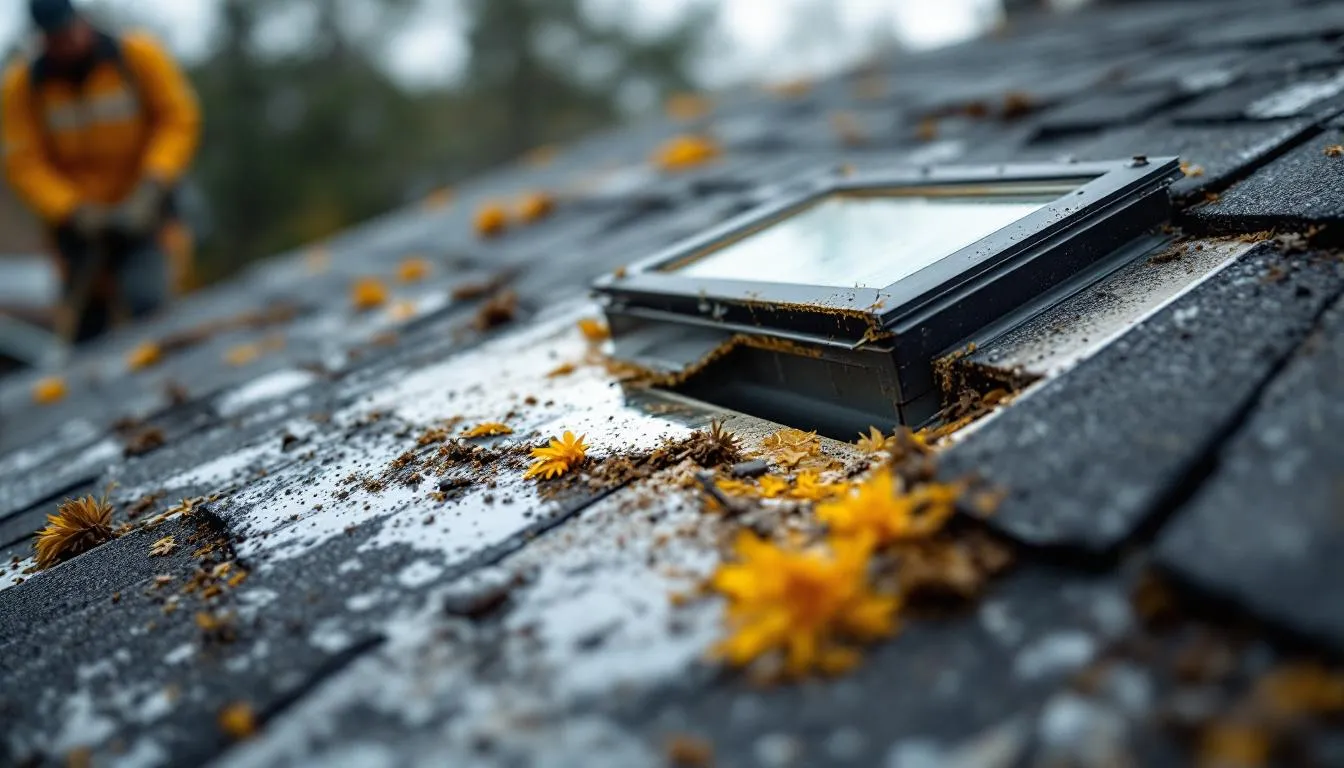
Skylights installed in the 1980s and 1990s in neighborhoods like SouthPark have seals that are well past their lifespan. Charlotte's UV rays and big temperature swings crack those seals, and hard thunderstorm rain pushes water right through. A roofer will reseal or replace the flashing and curb around the unit. Call for an inspection if you see any dripping or water stains near your skylight.
Telltale Signs
Warning Signs to Watch For
- Water dripping from the ceiling near or directly below the skylight during or after rain
- Brown or yellow water staining on the drywall or ceiling finish surrounding the skylight frame
- Condensation pooling on the interior skylight glazing or frame, especially in winter
- Visible cracking, hardening, or shrinkage of the sealant bead around the skylight curb
- Daylight or outside air detectable around the interior frame of the skylight unit
- Wood rot or soft spots on the curb framing when probed during attic inspection
Root Causes
What Causes Skylight Leaks and Seal Failure?
Flashing System Deterioration
Skylights need a step flashing system along each side. Step flashing is a series of small metal pieces woven between the shingles and the skylight frame to redirect water. Any weak spot in that system lets Charlotte's heavy downpours push water under the shingles and into the frame. Many older Charlotte skylights were installed with simple surface-applied metal flashing instead. That approach fails under the intense rainfall rates that Piedmont thunderstorms produce.
The Fix
Complete Skylight Flashing Kit Replacement
All existing flashing comes off first. The curb and surrounding sheathing get inspected and repaired as needed. Then a manufacturer-matched flashing kit with step flashings and a pre-formed upslope saddle goes on to meet North Carolina building code.
Glazing Seal and Gasket Failure
The gasket is the rubber seal that holds the glass panel tight to the skylight frame. Charlotte's high UV index and constant temperature swings make gaskets hard, brittle, and shrunken over time. When a gasket pulls away from the frame, windblown rain gets in between the glass and the frame. This shows up as a slow drip from the center of the skylight, not the edge.
The Fix
Gasket Replacement or Skylight Unit Replacement
If the frame is solid, replacement gaskets are sourced from the manufacturer and the glass is reseated correctly. If the unit is too old for parts or the frame is compromised, a full replacement goes in using a current ENERGY STAR rated unit for North Carolina's climate zone.
Condensation and Thermal Bridging
Charlotte winters, especially the cold snaps from December through February, drive up indoor humidity from heating systems. Single-pane or older double-pane skylights get very cold on the surface. Warm indoor air hits that cold glass and drops moisture as condensation. It runs down the frame and drips onto the ceiling just like a roof leak. Many homeowners chase flashing repairs that never solve it because the real problem is the skylight's thermal performance.
The Fix
Skylight Upgrade to Low-E Double Glazing
The old single-pane or failing double-pane unit gets replaced with a thermally broken, low-emissivity double-glazed skylight. That keeps the interior glass surface above the dew point during normal Charlotte winter conditions. Condensation stops at the source without touching the flashing system.
Self-Diagnosis
Which Cause Applies to You?
Check the signs you're observing to narrow down the likely root cause before your inspection.
| What You're Seeing | Flashing System Deterioration | Glazing Seal and Gasket Failure | Condensation and Thermal Bridging |
|---|---|---|---|
| Leak occurs only during heavy or wind-driven rain, not light precipitation | |||
| Water drips from center of glazing rather than from the frame edge | |||
| Dripping occurs on cold clear days with no rain present outside | |||
| Visible gap or shrinkage in the sealant bead around the exterior skylight curb | |||
| Frame interior shows streaks but gasket is visibly cracked and separated from glass | |||
| Moisture problem worsens in winter during heating season but improves in summer |
Free Quote
Get a free quote in Charlotte
No obligation — tell us what's going on and we'll text you back shortly.
Other Problems
Services That Fix This
Skylight Leaks and Seal Failure Near You
Also Helpful