Home › Common Problems › Poor Attic Ventilation
Poor Attic Ventilation
in Charlotte, NC
Poor attic ventilation is one of the most missed roofing problems in Charlotte. The humid subtropical climate causes heat to build up in summer and bake shingles from below. In winter, warm moist air hits cold roof decking and causes wood rot and mold. Charlotte has many homes with hipped roofs and finished bonus rooms that were never set up with proper ventilation. Waiting makes the problem worse and shortens your shingle life fast.
Charlotte Roof Repair Pros helps Charlotte, NC homeowners fix poor attic ventilation — call for a free inspection.
Quick Answer
Poor attic ventilation lets summer heat bake your shingles from below and lets moist winter air rot your roof deck from the inside. Many Charlotte homes with hipped roofs or bonus rooms were never built with enough vents to handle this climate. A roofer will add ridge vents or intake vents so air moves through properly. Call for an inspection if your upstairs rooms feel unusually hot or you spot mold in your attic.
Telltale Signs
Warning Signs to Watch For
- Attic air temperature exceeds 130°F or more on a hot summer afternoon
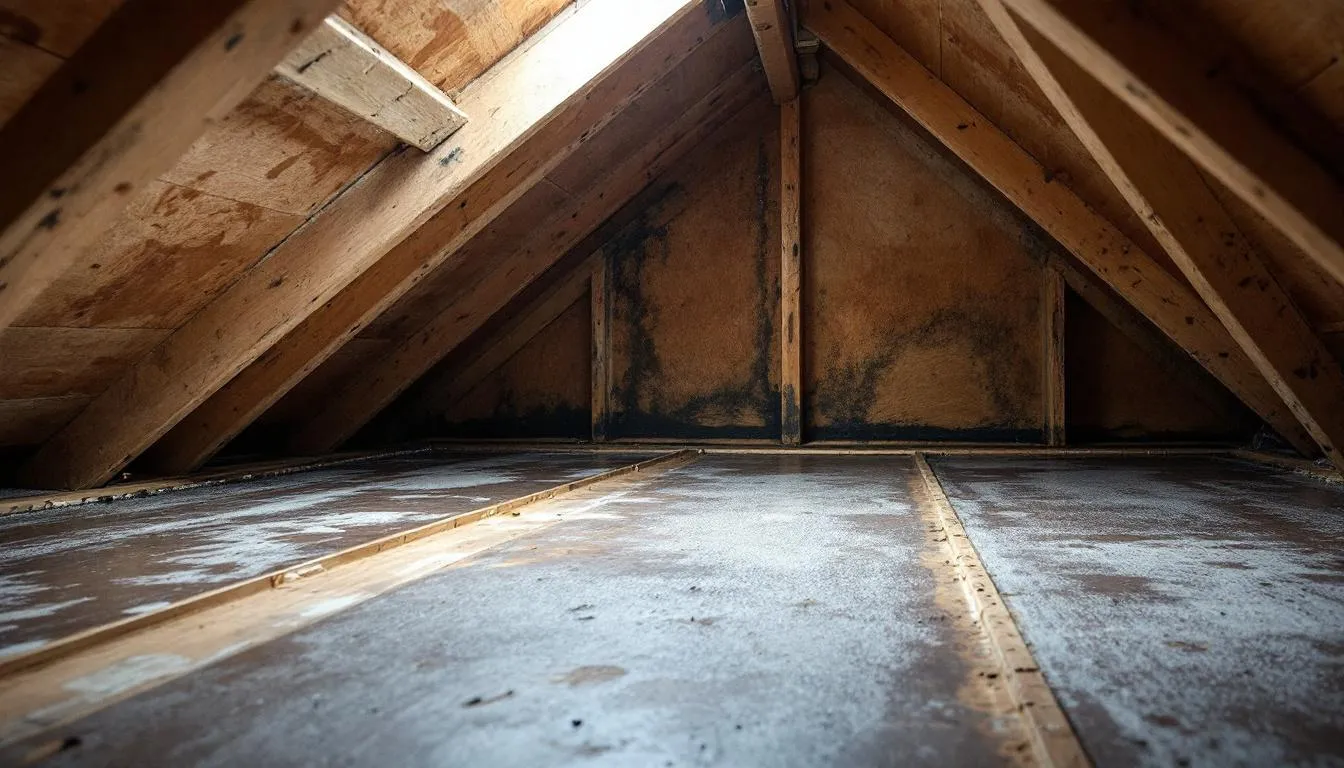
- Frost or condensation visible on attic roof decking or rafters during winter cold snaps
- Shingles aging and curling noticeably faster than the manufacturer's expected timeline
- HVAC system running excessively to maintain indoor comfort during summer months
- Mold or mildew visible on attic insulation or wood framing surfaces
- Ice dams forming at the eave edge during winter freeze events despite low snowfall
Root Causes
What Causes Poor Attic Ventilation?
Blocked or Insufficient Soffit Vents
Good attic ventilation needs cool air coming in at the soffit and rising out through the ridge. The soffit is the underside of the roof overhang where intake vents sit. In many Charlotte homes, blown-in insulation has buried those soffit vents completely. Without enough air coming in, even a good ridge vent pulls air the wrong way and traps heat and moisture inside.
The Fix
Soffit Vent Addition and Insulation Baffling
Extra perforated soffit vent panels are added to meet the 1:150 or 1:300 net-free-area ratio required by North Carolina code. Baffles are installed at each rafter bay to keep an open air channel between the insulation and the sheathing from eave to ridge.
Inadequate or Mismatched Exhaust Ventilation
Some Charlotte homes have both power attic fans and passive ridge vents on the same roof. That combination short-circuits airflow because the fan pulls replacement air through the ridge vent instead of the soffit. Most of the attic ends up with no real ventilation at all. Other homes simply have too little exhaust vent area for their attic size. That calculation was skipped on a lot of homes built during Charlotte's fast growth years.
The Fix
Exhaust Ventilation System Redesign
The mismatched vent types get replaced with one continuous ridge vent paired with enough soffit intake. Total vent area is calculated against attic floor area to confirm it meets North Carolina Residential Code before any work is finished.
Bathroom or Kitchen Exhaust Vented into Attic
A common code violation found in Charlotte homes is a bathroom exhaust fan that dumps air into the attic instead of outside. That air often carries 50 to 60 percent relative humidity. It pumps warm wet air into the attic every time the house is occupied. In Charlotte's already humid climate, that moisture causes condensation on the decking within months. Then Stachybotrys and other mold species start growing on the wood.
The Fix
Exhaust Fan Rerouting to Exterior
The exhaust duct gets extended with insulated flexible duct and connected to a proper cap through the roof or soffit. That stops moisture at the source and lets the attic dry out once ventilation is corrected.
Self-Diagnosis
Which Cause Applies to You?
Check the signs you're observing to narrow down the likely root cause before your inspection.
| What You're Seeing | Blocked or Insufficient Soffit Vents | Inadequate or Mismatched Exhaust Ventilation | Bathroom or Kitchen Exhaust Vented into Attic |
|---|---|---|---|
| Insulation pushed against the sheathing at the eave blocking the ventilation channel | |||
| Ridge vent present but attic still overheating and no soffit vents visible from outside | |||
| Both a power attic fan and a ridge vent present on the same roof | |||
| Bathroom exhaust fan duct terminates loosely inside the attic space | |||
| Condensation or frost on decking in winter despite no active roof leak | |||
| Total vent openings visually very small relative to the attic footprint |
Free Quote
Get a free quote in Charlotte
No obligation — tell us what's going on and we'll text you back shortly.
Other Problems
Services That Fix This
Poor Attic Ventilation Near You
Also Helpful