Home › Common Problems › Missing or Blown-Off Shingles
Missing or Blown-Off Shingles
in Charlotte, NC
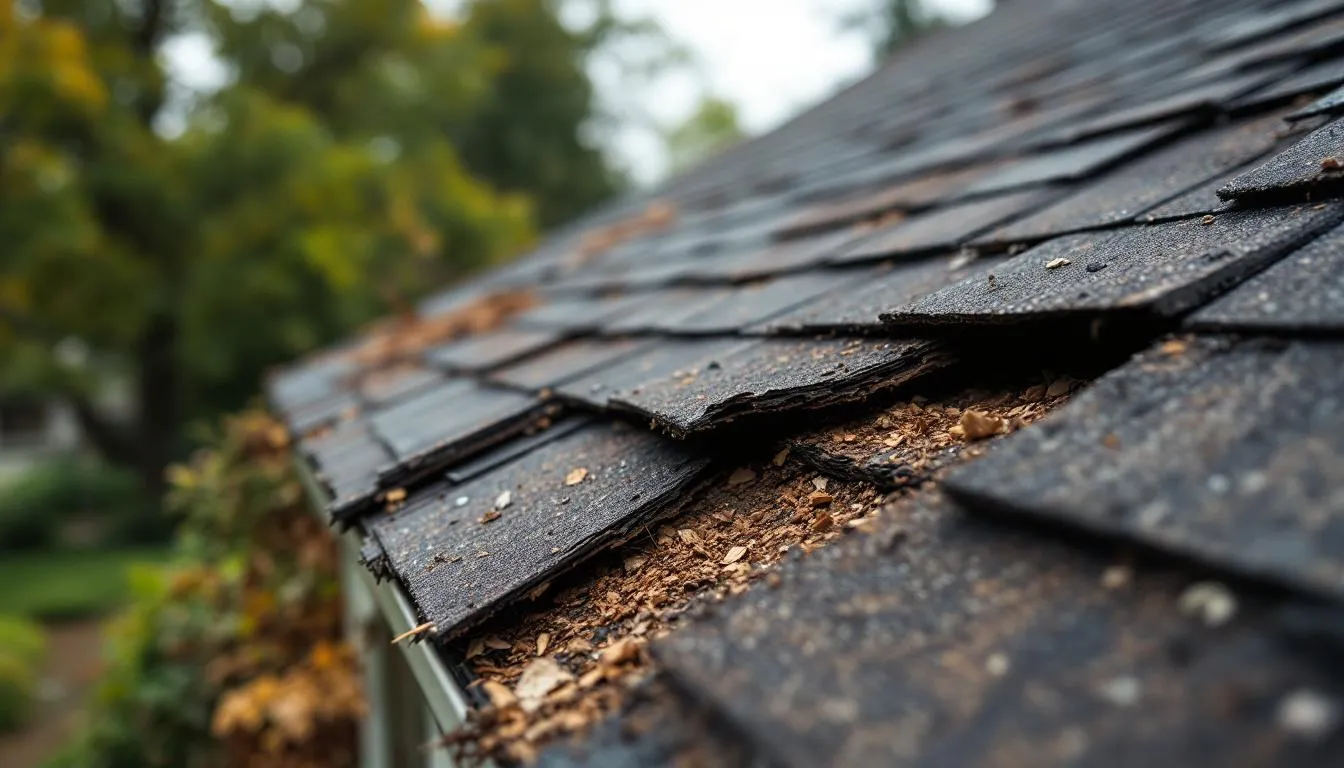
Missing or blown-off shingles are one of the most urgent problems Charlotte homeowners face. Severe thunderstorms, tropical remnants, and nor'easters push wind gusts well past 50 mph through the Piedmont region. Many Charlotte homes built in the 1980s and 1990s have three-tab asphalt shingles that have reached the end of their service life. Those older shingles are far more likely to come off in a storm. Even a few missing shingles can let water rot the decking and damage interior ceilings in a single rain event.
Charlotte Roof Repair Pros helps Charlotte, NC homeowners fix missing or blown-off shingles — call for a free inspection.
Quick Answer
Charlotte storms regularly push winds past 50 mph, and older three-tab shingles on 1980s and 1990s homes peel off easily. A roofer will remove what is left of the damaged shingles and nail down new ones. The exposed wood underneath soaks up rain fast. Call for an inspection if you see bare patches or shingle pieces in your yard.
Telltale Signs
Warning Signs to Watch For
- Visible bare patches or dark felt underlayment exposed on the roof slope
- Shingle pieces or granule piles found in the yard or gutters after a storm
- Water stains on interior ceilings or attic rafters following rainfall
- Curling or lifted shingle tabs along the edges or ridge line
- Daylight visible through the attic roof decking when inspected from inside
- Increased energy bills as the thermal envelope is compromised
Root Causes
What Causes Missing or Blown-Off Shingles?
Storm Wind Uplift
Charlotte sits in a region hit often by severe storms and the remnant circulation of Atlantic hurricanes tracking inland through the Carolinas. Those storms create powerful uplift forces on roof surfaces. Shingles nailed in the wrong spot pull free easily under that pressure. Shingles with brittle sealant strips do too. So do shingles installed with the bare minimum number of fasteners allowed by code.
The Fix
Full Shingle Replacement with Upgraded Fastening
We remove damaged sections down to the decking and install new architectural shingles using a six-nail fastening pattern per current North Carolina Residential Code. Starter strips with reinforced adhesive are applied along rakes and eaves to resist future uplift.
Aged Sealant Strip Failure
Asphalt shingles use a sealant strip to bond each row to the row above it. Charlotte rooftop surface temperatures routinely exceed 160°F in summer, and that heat breaks down the sealant over time. Once the sealant strip fails, shingles are held only by their nails. At that point, even a moderate wind event can flip, crack, and eject them.
The Fix
Shingle Reseal and Selective Replacement
Bad shingles are taken off and new ones are put in their place. A roofing-grade adhesive is pressed under the edges of nearby shingles to seal them back down.
Improper Original Installation
During the late 1990s and 2000s, Charlotte grew fast into Cabarrus, Union, and Mecklenburg Counties. Some roofing crews made a mistake called high-nailing. That means the nail was driven too high on the shingle, above the correct nail line. High-nailed shingles are much more likely to rip off in the first real windstorm.
The Fix
Corrective Re-Roofing with Code-Compliant Nailing
Every nail is placed inside the manufacturer's nail zone and checked row by row. The finished roof is built to meet current Mecklenburg County building permit standards.
Self-Diagnosis
Which Cause Applies to You?
Check the signs you're observing to narrow down the likely root cause before your inspection.
| What You're Seeing | Storm Wind Uplift | Aged Sealant Strip Failure | Improper Original Installation |
|---|---|---|---|
| Large patches of shingles missing immediately after a named storm or high-wind event | |||
| Shingles found in yard are intact but detached cleanly along the bond line | |||
| Multiple shingles missing across different roof planes on a home under 15 years old | |||
| Shingles brittle, cracked, and granule-bare before detaching | |||
| Nails pulling through shingle tabs rather than shingles tearing at the bond | |||
| Water intrusion at multiple unrelated points after a single storm |
Free Quote
Get a free quote in Charlotte
No obligation — tell us what's going on and we'll text you back shortly.
Other Problems
Services That Fix This
Missing or Blown-Off Shingles Near You
Also Helpful